Context
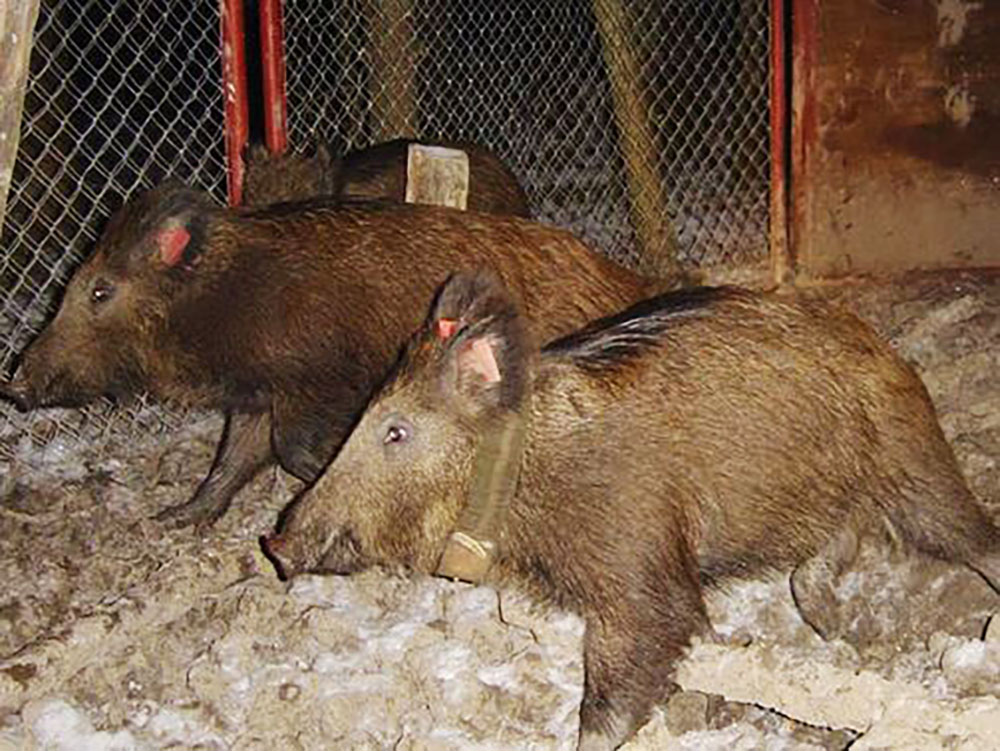
The wild boar is an emblematic species of European landscapes, with expanding populations and increasing interactions with human activities. On the Swiss Plateau, where agricultural and forest areas are closely interwoven, hunting pressure and landscape structure deeply influence the movements of these animals. Understanding how these factors interact is essential for developing management strategies to reduce conflicts with agriculture and public health.
FatBear expertise
Our work analyzed GPS data from wild boar tracked in three study areas with contrasting hunting methods in Switzerland (Geneva and Vaud) and France, over four distinct periods (pre-hunt, early hunt, late hunt, post-hunt). We highlighted marked differences in movements between hunted and non-hunted days, with responses depending on the geographic area and time of day. The use of step-selection functions coupled with high-resolution LiDAR data allows us to quantify how wild boar adjust their habitat selection across different vegetation cover strata according to hunting pressure at the monthly scale, on hunted and non-hunted days, and by time of day.