
Context
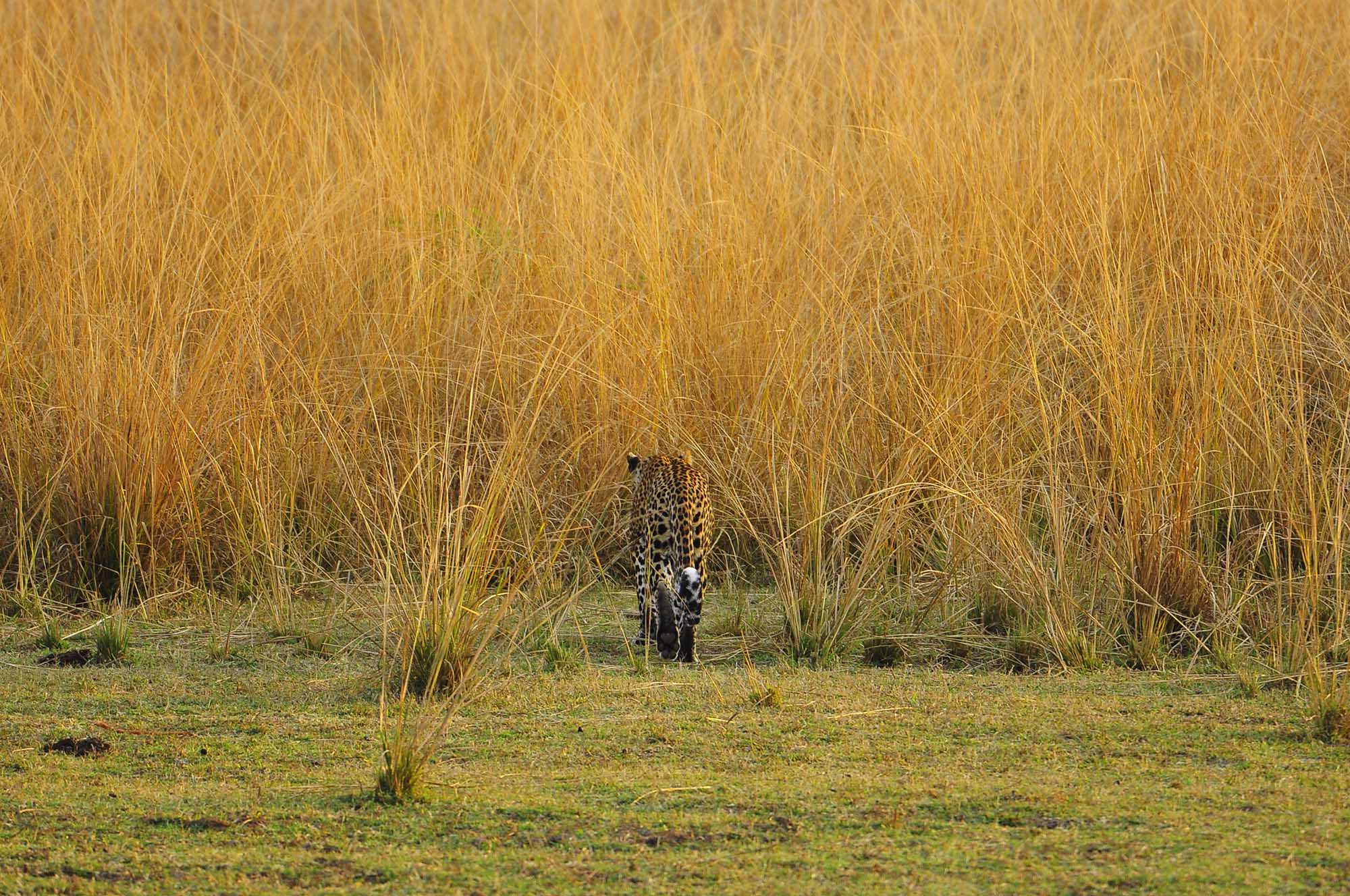
The leopard has disappeared from over 41% of its historical range in Africa, but the lack of reliable data at the continental scale hampers conservation efforts. Current estimates, dating back to 1988 and based on a simplistic relationship with rainfall, are widely considered outdated and overestimated. In response to this situation, an international team of researchers undertook to develop a robust predictive model to assess leopard populations and provide quantitative targets for their restoration.
FatBear expertise
Our innovative approach combines population density modeling from spatially explicit capture-recapture data and habitat quality modeling at the continental scale. By integrating various environmental and anthropogenic variables, we identified the main factors influencing leopard density: small ruminant density (sheep and goats), distance to human settlements, agricultural cover, and wild prey richness (bovids and suids). The results reveal a current population estimated between 44,800 and 142,600 individuals, well below previous estimates. Our analytical framework enables the identification of regions where conservation investments are most promising and the reassessment of sport hunting quotas, whose levels exceed recommended sustainable thresholds in more than half of the countries concerned.